
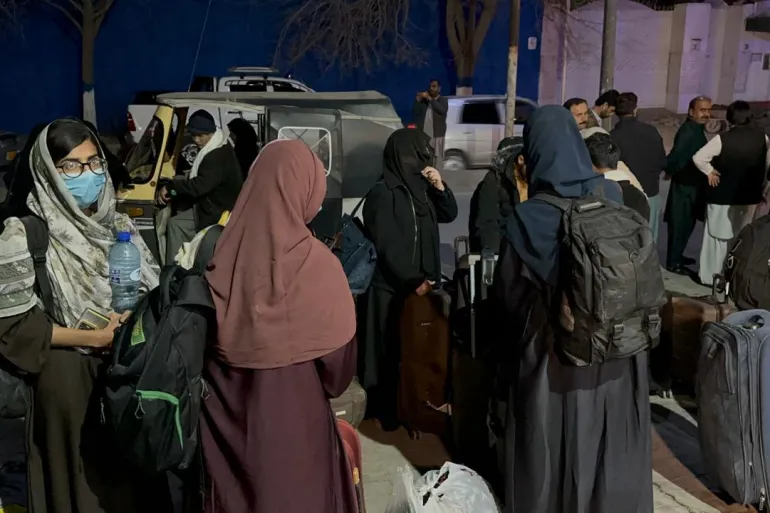
PakistanIndonesia.com – For many Pakistani students studying abroad, life in Iran had once felt routine and predictable. Classes, shared apartments, and daily conversations with family back home formed the rhythm of everyday life. But that sense of normalcy vanished almost overnight when conflict erupted across parts of the country.
As explosions echoed and uncertainty spread, hundreds of students suddenly found themselves trapped in a rapidly deteriorating security situation. What followed was a desperate attempt to leave safely, a journey marked by fear, confusion, and hope.
Some students later described the experience in simple but powerful words: they were not thinking about politics or geopolitics. “We were just praying,” one student said, recalling the moment when the reality of war became unavoidable.
A Sudden Crisis for Pakistani Students in Iran
Iran has long been a destination for Pakistani students, particularly those studying medicine, religious studies, and engineering. Universities in cities such as Tehran and Qom host thousands of international students each year.
When the conflict intensified, many of these students suddenly found themselves far from home in an increasingly uncertain environment. Reports of military activity, air defence alerts, and heightened security measures created widespread anxiety among foreign students.
Communication networks became crowded as students tried to contact their families in Pakistan, reassuring them that they were safe while also seeking information about possible evacuation plans. For many, the first reaction was disbelief. The speed at which the situation changed left little time to prepare.
Fear and Uncertainty as Violence Escalated
Students described tense nights spent monitoring news updates and social media. Some reported hearing distant explosions or seeing unusual military activity in the sky.
Although universities attempted to maintain calm and continue academic activities, the atmosphere quickly shifted as the crisis deepened. Parents in Pakistan began urging their children to leave the country as soon as possible.
Many students gathered in groups, discussing evacuation routes and checking travel options. Yet the uncertainty surrounding transportation and border crossings made decisions difficult. For some, the fear was less about direct danger and more about being stranded in a conflict zone with no clear way home.
A Difficult Journey Toward Safety
Eventually, groups of Pakistani students began travelling toward border crossings in hopes of returning home. The journey itself was not easy.
Long travel times, crowded roads, and security checks slowed movement across regions. Students carried only essential belongings, unsure how long the journey might take or what they might encounter along the way.
Crossing the border into Pakistan brought a mixture of exhaustion and relief. For many, the moment symbolized the end of days filled with anxiety and uncertainty.
Families waiting on the Pakistani side described emotional reunions after days of constant worry.
Pakistan’s Response and Evacuation Efforts
Officials in Islamabad closely monitored the situation as the conflict unfolded. Diplomatic missions coordinated with local authorities and international partners to assist Pakistani citizens seeking to leave.
Embassies provided guidance, shared travel information, and worked to ensure that students could safely reach border points.
The government also faced pressure from families at home who demanded swift action to protect their children abroad.
Such crises highlight the challenges governments face when large numbers of citizens are living or studying overseas during times of regional conflict.
A Reminder of Global Instability
The experiences of Pakistani students in Iran underscore how quickly geopolitical tensions can affect ordinary people far from the centers of decision-making.
For students who travelled abroad seeking education and opportunity, the conflict became an unexpected lesson in the unpredictability of global politics.
Many now say their priorities have changed. Completing their studies remains important, but safety and stability have taken on new meaning.
Penutup
The escape of Pakistani students from war-hit Iran is a reminder that international conflicts rarely remain confined to battlefields. They ripple outward, shaping the lives of civilians, students, and families across borders.
For those who returned safely to Pakistan, the experience is likely to remain unforgettable. It also highlights a broader reality: in a world where regional tensions can escalate rapidly, the safety of citizens abroad often depends on swift diplomacy, coordination, and resilience in the face of uncertainty.


