
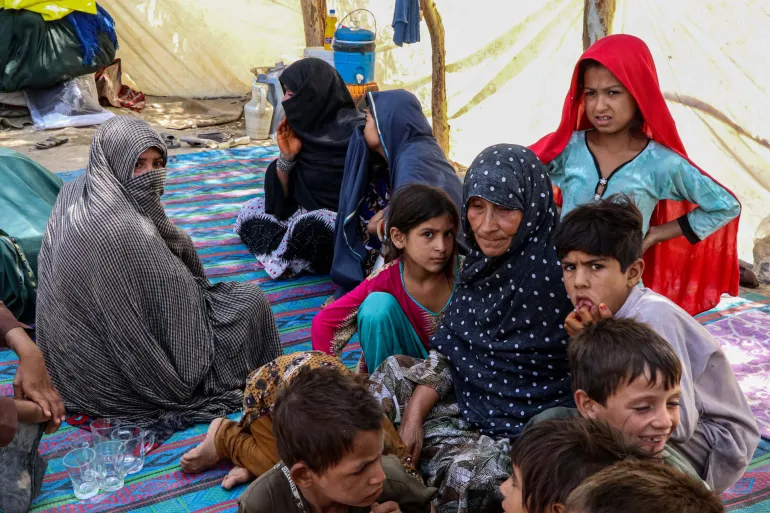
PakistanIndonesia.com – The humanitarian crisis linked to the Afghan displacement Pakistan border conflict is rapidly worsening. The United Nations says nearly 66,000 people have fled their homes after intense fighting erupted along the frontier between Afghanistan and Pakistan.
Heavy shelling, cross-border attacks, and military operations have forced thousands of families to leave villages in eastern Afghanistan. Many civilians escaped with only basic belongings as violence intensified near the border region. Humanitarian agencies warn that the displacement could increase further if clashes continue.
Afghan Displacement Pakistan Border Crisis Deepens
The United Nations and humanitarian groups say the Afghan displacement Pakistan border crisis is growing quickly. Most displaced families come from provinces near the frontier, including Khost, Paktika, and Nangarhar.
Aid organisations report that many people fled during nighttime shelling and airstrikes. Entire communities moved toward safer districts or temporary shelters.
According to humanitarian assessments, the fighting has damaged homes, local markets, and basic infrastructure. These conditions make it difficult for displaced families to return soon.
Fighting Along the Pakistan–Afghanistan Frontier
The conflict escalated after military operations and retaliatory strikes increased along the border. Pakistan says its operations target militant groups operating from Afghan territory.
Afghan authorities, however, accuse Pakistan of carrying out attacks that harm civilians and destroy infrastructure.
Recent clashes between border forces have become the most intense in years. In some areas, artillery and airstrikes reportedly hit villages close to the frontier.
These incidents have fueled protests in Afghan cities and heightened tensions between the two neighbouring countries.
Humanitarian Impact on Civilians
The Afghan displacement Pakistan border conflict is creating a growing humanitarian emergency.
Many displaced families now live in temporary camps or with relatives. Food, water, and medical supplies remain limited in several areas. Schools have closed in some districts, while health services struggle to support the rising number of displaced civilians.
Aid groups have urged both sides to protect civilians and avoid targeting residential areas.
International Calls for Restraint
The United Nations and international organisations have called for immediate de-escalation.
Officials warn that continued fighting could push thousands more people from their homes. They also stress that protecting civilians must remain a priority during any military operation.
Diplomatic efforts are underway to encourage dialogue between Islamabad and Kabul. However, tensions remain high along the frontier.
Penutup
The growing Afghan displacement Pakistan border crisis highlights the human cost of escalating regional tensions. Tens of thousands of civilians have already fled their homes, and many more remain at risk if violence continues.
For families living near the frontier, the conflict has turned daily life into a struggle for safety and survival.
Whether diplomatic efforts can ease tensions between Pakistan and Afghanistan may determine how quickly displaced communities can return home.


