
PakistanIndonesia.com – The Pakistan protest Khamenei crisis intensified after reports that a joint strike by the United States and Israel killed Iran’s Supreme Leader, Ali Khamenei. News of the strike triggered widespread protests across several cities in Pakistan.
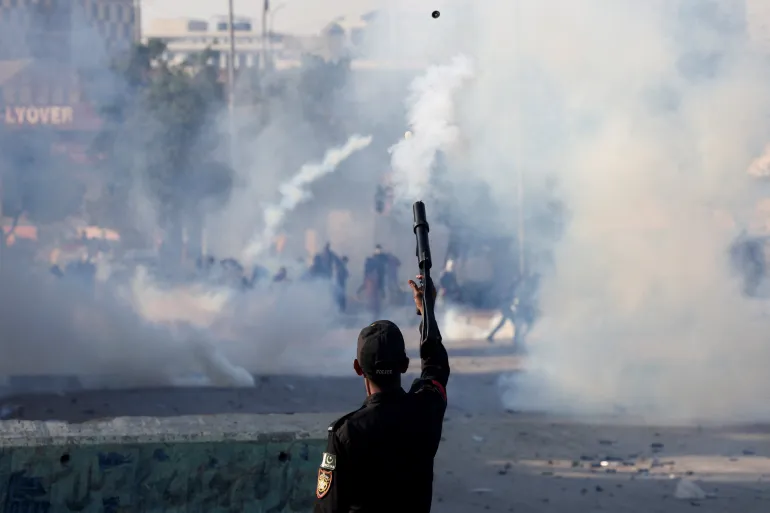
Demonstrations quickly turned violent. Clashes between protesters and security forces left at least 20 people dead, according to local officials. Streets in several urban areas saw burning barricades, damaged vehicles, and heavy police deployment. Authorities urged calm, but the protests continued as anger spread through major population centers.
Pakistan Protest Khamenei Sparks Nationwide Demonstrations
The Pakistan protest Khamenei demonstrations began shortly after reports of the strike circulated on television and social media.
Crowds gathered in cities including Karachi, Lahore, and Islamabad. Protesters carried banners condemning the strike and chanted slogans against the United States and Israel.
Some rallies remained peaceful. Others escalated into clashes with police as crowds attempted to block major roads and public squares.
Security forces responded by deploying riot control units and restricting movement in several areas.
Violence Escalates During Pakistan Protest Khamenei Unrest
The situation deteriorated in several districts where protesters confronted police barricades. Stones were thrown, vehicles were damaged, and fires were reported in crowded commercial areas.
Authorities confirmed that at least 20 people died during the unrest. Dozens of others suffered injuries during clashes or stampedes.
Hospitals in major cities treated victims throughout the night. Emergency services remained on high alert as protests continued in some neighborhoods.
Officials warned that additional security measures could be introduced if the situation worsens.
Regional Tensions Fuel Public Anger
The Pakistan protest Khamenei unrest reflects wider tensions across the Middle East and South Asia.
Pakistan maintains diplomatic relations with Iran while also cooperating with Western countries on security matters. Events affecting Iran often trigger strong public reactions in Pakistan due to political, religious, and cultural connections.
Analysts say regional conflicts can quickly influence domestic sentiment. When dramatic events occur abroad, protests sometimes erupt in Pakistani cities.
International observers have urged calm as tensions rise across the region.
For further details on the developing crisis, reports from Al Jazeera and international agencies continue to track the situation.
Government Calls for Calm
Authorities in Pakistan have appealed for restraint while security forces work to restore order.
Officials warned that violence and property damage could lead to stricter enforcement measures. Police increased patrols near sensitive locations, including diplomatic missions and government buildings.
Community leaders and religious figures also called on protesters to avoid further escalation.
Maintaining stability has become a priority as the country faces multiple regional security challenges.
Penutup
The deadly Pakistan protest Khamenei unrest demonstrates how international events can rapidly influence domestic politics and public sentiment.
For many protesters, the demonstrations represent anger over geopolitical developments far beyond Pakistan’s borders. Yet the violence has also highlighted the delicate balance authorities must maintain between public expression and national stability.
Whether tensions ease or protests continue may depend on how regional developments unfold in the coming days.


